Wednesday, January 21, 2009

Into the Wild


[Sean Penn on location for the shoot of 'Into the Wild']

Well. 2 years. A very long hiatus indeed.
I feel like I've been to Alaska and back, on my own harrowing personal journey.... possibly having died on the way and come back as a zombie... no, that's a different film. The one that prompted me to put finger to keyboard is none other than Sean Penn's directorial offering "Into the Wild".

Based on Jon Krakauer's book, who in turn based it on the terse jottings of the real life Christopher McCandless. If you've read Krakauer's Into Thin Air, or his article, you would understand my curiosity. The TV Guide's pithy one line synopsis made it sound less thatn compelling but Penn's past filmic genius spoke in its favour. And, whatever the average multiplex-goer (yup, that's me) might think of it, I surprised myself by enjoying this film. 

The journey that Christopher McCandless, a bright college graduate from California, takes across America is a pretty uncompromising one. I can think of another young man who made a similar journey, but one that ended in a profound accomplishment. Two thousand years ago in India, a young man called Siddhartha left his wife and child and headed into the wilderness seeking the truth.

What Christopher (Emile Hirsch) finds in the wild lands beyond Californian borders are a Hippie couple, a besotted 16 year old girl and a lonely old widower. The last two he proceeds to wound by rejecting their love while the first two he treats as ersatz parents. A saint this hero is not. He is also guilty of no little cockiness as he stands on a steep hill taunting an old man, who the climb could easily kill, and warbles 'King of the Road' while stowing away on a goods train. Nothing can stop his onward motion, nothing can stamp out his drive. Woven throughout the journey, later into the film's flow than most of us would have liked, are the clues to his driving need to move on. Bickering parents, forever on the brink of divorce but never quite rent asunder; a father with a dirty secret, a first wife he was still legally married to and a son that he had neglected; a life of materialist greed and petit-bourgeois ambitions. Yeah, so far, so boohoo you might say. Sean Penn and Emile Hirsch tread lightly on these worn-down tracks, richly mined by other indie filmmakers. Yet somehow it works.  Under Penn's sure direction, the flight 'away' from a dysfunctional family transforms convincingly into a quest for something, a moving towards and upwards. 

The camera, the light and the circuitous path of each scene feels constructed from a fragmented memory of some trauma. A hit-and-run victim lying on a baking hot road looking up at one's rescuers against the midday sun might feel like this.

Ultimately it is the wilderness into whose arms he fled, Nature red in tooth and claw, that defeats Christopher McCandless. I won't give away the ending. Suffice it to say all stories about city folk roughing it in the wild should realistically end this way. 

I can't say I liked where this film took me or what it had to show. But its enduring message still resonates. Happiness is only real when it is shared.

As a final caveat, it just hit me (its nearly midnight and I haven't slept much in, well, the past year) - why do I like these Boy's Own stories? They don't appeal to any other women I know. Somewhere inside me is a dirty-kneed 12 year old boy/girl still struggling up that hill, on the brink of some magnificent discovery. Frozen in time in that moment, before an ocean of hormones swamped him/her, Life overcame dream and she became a mother. That make sense?

Monday, September 19, 2005

Wake up and smell the underclass

Old news on new ghettoes?
The CRE is waking up a tad late to the reality of Asian ghettoes in Britains cities.
The reality of the segregated life here was a shock to me when I arrived. To see how little Asians and White British communities mixed together. It seemed I had to make a choice, belong to one or the other. Each side with its own quasi-tribal behaviour, affiliations, attitude and accent. You couldn't hang with one set and sympathise with the other. Not any more. Not after 7/7.
Being an Asian in Britain is depressing. Bad enough that one is lumped together into an amorphous characterless entity titled Asian, where one ceases to be Indian/Pakistani/Hindu/Muslim/Brahmin etc., which labels actually meant something to one for most of one's life. It is worse that this amorphous lump is then damned unequivocally and without any exceptions, to being a community on a nosedive into slumlife. Worse too that the slum-dwellers, with by far more time on their hands, haunt most Asian website message boards, spewing obscenities and vitiating any sympathy people might have towards them.

UK Fast Becoming Racially Segregated Nation

- Vijay Dutt. London, September 19, 2005

Warning has been issued that Britain is in danger of developing into a "ghetto" state, a racially segregated nation with ethnic minorities, particularly Muslims and Blacks, living in ghettos cut off from the rest of the society.

Trevor Phillips, Chairman of the Commission for Racial Equality, believes that a New Orleans like enclaves, " literal black holes into which nobody goes without fear and trepidation and nobody escapes undamaged" are inevitable. He says Muslim and Black ghettos are splitting cities.

He criticises the Government's Race Relations policy for promoting the acceptance of difference rather than upholding British values. " We are sleepwalking our way to segregation" and becoming strangers to each other and leaving communities to be marooned from the mainstream, Phillips says.

A report by the Institute of Public Policy Research revealed that with 1,147,905 new arrivals between 1991 and 2001 immigrants now make up 7.5 per cent of the population-one in 13 living here. A CRE research shows that most white people do not have a non-white friend while young Asian or Black have almost all Asian or Black friends.

The number of people of Pakistani heritage in ghettos, defined as areas with more than two-thirds of any one ethnic group, trebled between 1991 and 2001

Harriet Harman, the Constitutional Affairs minister, reflecting Phillips views also warned that some of Britain's black and poor communities were sinking into the same underclass exposed in the United States by Hurricane Katrina.

Wednesday, September 07, 2005

the Argumentative Indian

Argumentative Amartya
Early this August, Amartya Sen gave a talk in which he set out the positions he’s taken in his new book, The Argumentative Indian, one of the most profound and wide-ranging inquiries into the idea of India written in recent times.

Indians like to argue, he said, pointing to what he calls the “argumentative tradition”, an acceptance of plurality as the natural state of affairs, a long and robust tradition of heterodoxy, dissent, inquiry and analysis.

I had the good fortune of once interviewing professor Sen, this was before he won the Nobel Prize for Economics (the wide-ranging variety of my career often surprises even me, since I tend to forget past successes in light of present struggles). And I was struck by his modesty and accessibility to a relatively unknown rookie TV reporter. He chose to give me an interview rather than hold court at doddering old IIC. My employer had sneered at my ability at securing interviews with prominent people but thanks to Professor Sen, I was able to prove him wrong.

His latest book continues his tradition of revelation. I'll leave the objections to the argumentative pundits of India's many universities and diaspora. To me, it was an affirmation of what I thought about our great scholarly traditions, his fine logic gave these thoughts structure. His book reminded me of the many reasons I was once proud of Hindu tradition and thought:

- Aryabhatt: the ancient Indian mathematician of 476BC who postulated the Earth was round, calculated the value of Pi (to greater accuracy than Ptolemy), worked out the duration of the day at the poles and the heliocentric theory of Gravitation, among others. His work Aryabhattiya was translated into Latin in the 13th century.
- Gargi: a woman philosopher of ancient India (Vedic period 800BC) whose theories challenged the learned men of her day.
-
Kashyapa or Kanada: propounded the Vaisheshika-Sutra (Peculiarity Aphorisms) the atomic theory of matter.

"In India I found a race of mortals
living upon the Earth, but not adhering to it.
Inhabiting cities, but not being fixed to them,
possessing everything but possessed by nothing".

- Apollonius Tyanaeus
(Greek Thinker and Traveller 1st Century AD)

To sum our past achievements up in one word (plurality) - and shroud it in dense terminology that is hard to debate - is the legacy of Academicians who fear the original Argumentative Indian. The Man (or Woman) on the street.

Sen also talks about the parable of the Kupamandaka (a favourite one of my grandfather too, incidentally, Bengali academicians being predictable in ttheir tastes). Kupamandaka (Sanskrit for Frog in the Well) who knows nothing about the outside world and this lack of knowledge is why he perishes.

Hmmmm, perhaps there are some Kupamandakas around here...

Thursday, September 01, 2005

Of things Intangible but Precious and Quintessentially of this City

List continued!
What's Not To Like-II

8. Christopher Marlowe. Teeth bared in a smile, secretly a snarl, his true nature hidden behind a serene facade, this darling of the theatre was least what you'd expect of the author of a canonical work. For me, his writing made studying English Literature an adventure. Oh yes, I do declare I was in love with thee, Christopher Marlowe. Read his works here: Electronic Texts of Marlowe's Ouevre.
A man whose life was stranger than his fiction. Writer, Adventurer, Scholar, Spy. It brightens my day to see his lines quoted inside Tube trains (Faustus' soliloquy to Helen of Troy).
Was Marlowe Shakespeare? Read all about it in this somewhat scholarly rebuttal of the arguments of ye-of-little-faith.
Personally, he would still be a God to me had he written only Dr.Faustus.

The Djinns of Charivari


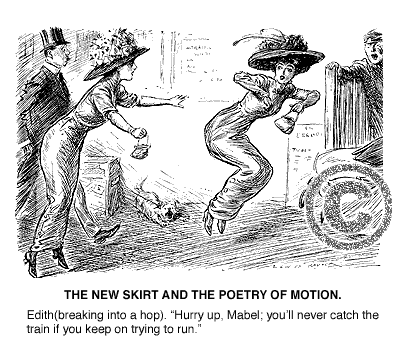
The first edition of Punch was published on July 17, 1841. Its founders, wood engraver Ebenezer Landells and writer Henry Mayhew, got the idea for the magazine from a satirical French paper, Charivari (indeed, the first issue was subtitled, "The London Charivari").

The Closure of Punch magazine in 2002 led to a brief spite of soul-searching amongst britain's literates. The keyword being brief. People were briefly panicked that the magazine so redolent of Englishness, of English wit and humour and independent thinking was now dead from neglect.


That was before Chavs with plastic bracelets and velour tracksuits overran the country. There is no more soul-searching. Now all that you find at the newsagents are "What Camera", "Which Cistern" and "Bratty Kids" type of magazines for a nation suffering from attention deficit disorder. The clever writing and edgy editorials are left to the minority of leading Newspapers and their supplements. Which is what makes the arm-spraining Sunday newspapers worth the weight-lifting trouble.

I'm no Amerophile but I'd rather read American Vogue than the brainless British version (90% fashion and shopping as if culture and lifestyle were no longer a modish concern), or The Washingtonian rather than London magazine (which is 90% real estate and 10% faff with no thought-provoking articles).


Charivari implies discord, a cacophonous mockery. I used to be enamoured of this word back when I wrote poetry by the reams and I wrote one called the Djinns of Charivari. Little did I know how prophetic that was. We are living at their mercy today. They have ripped intelligent thought and culture to shreds. Imagination really is dead, and so is curiosity. You see the results of this on the buses-- the empty-eyed, embittered and uninterested. No one ever directed their attention to what the world has to offer, or taught them how to live or to know good from bad. They trudge from chav homes to chav locals and back, pausing to urinate on the local heritage.

Friday, July 01, 2005

the Raw & the Cool - folk music

Beat of India - At the heart of music. The folk music of India

Go listen to some of the samples they have trustingly provided on this website. You get 3 x free samples - that you get to keep forever - for just signing up with yr email. And, no, I havent been flooded with spam from them. Nothing except an email giving me the links to those 3 songs.

When you think that some of these folk singers and musicians are probably the last of their kind... and you can buy their mp3 song for less than a dollar, it just boggles the mind.

If I was not an impoverished filmmaker, I would do something about these people. Their raw voices, the sound of the wind in the trees and of the village fair behind them - its deep in our blood - and it moves us far more than any highly processed pop song.

Passionate about Saag Aloo?

Tigers & Strawberries: One Potato, Two Potato, Red Potato, Blue Potato

Never thought I'd see the day. When a blogger posted passionately about Saag Aloo, not to mention the much maligned culture of India. SO someone still loves the colours the vibrant life the textures...?

Must be an American. No one in this country likes people from the Indian subcontinent. For proof, try being a South Asian in Birmingham. It can take several hours to get any service at shops, stations, restaurants if you can get anyone to answer your queries at all. I've never been to a more miserable hole full of misanthropes in my life.

That said - was pleasantly surprised to find someone other South Asian housewives - was posting passionately on Indian food.

Saturday, February 05, 2005

on Seeing 'Don' after 20 years...


- the common buffoon - replaces the westernised obviously corrupt anti-hero. The simple and innocent villager from Benaras falls into the cunning policeman's trap. Now why can't I write simple screenplays like that.

posted via IM

Thursday, January 27, 2005

Does Fantasy have a colour or nationality?

Today we discussed: Do Indians write Fantasy?

At first I said, "No".

Then thought for a bit, and realised – that, yes, we do.

After all, those stories based around Mythological characters, usually found in vernacular literature (more experimental and innovative than Indian English writing) – aren’t they a kind of Fantasy?

“But isn’t that more like Historical writing?”

”Well, Western Fantasy is based on history too – medieval history. They are all mired in the same old vision of a medieval feudal Europe. That’s not the only version of history you know.”

“Hmmm, that’s true…”

“It takes some getting used to, it's hard to get one’s head around – but fantasy can include alternatives to castles, knights, dragons and ogres. It could be about an opulent eastern kingdom with maharajahs, blue gods, tigers and marble palaces. I mean, why not...?”

Wednesday, November 12, 2003

Thank You, Ennio Morricone!


On Monday night we went to see Ennio Morricone conducting his works in the Royal Albert Hall.

It was a lucky coincidence I'd bought Time Out that day and we only just caught it and got good seats.

The venue itself is so special, just telling a cabbie "Royal Albert Hall" has an effect. And then Knightsbridge.

The ultimate exclusive London postcode. The other people arriving all looked very interesting,

R recognised a TV celebrity or two sitting next to us. Our seats were in the stalls very close to the stage,

just under the exclusive opera style "box" seats.


R had always admired Ennio Morricone's works, he had a tape of his compositions since he was a little boy.

Only he never dreamed he would ever get to see the Maestro perform live. And on his birthday.

It was a very special concert to celebrate his 75th birthday. Him conducting the Rome Sinfonietta -

a huge orchestra, a colection of every possible musical instrument ever invented,

including a large drum bells and percussion section, a piano, cellos etc joined by the Crouch End Festival Choir

who have made quite a name here - all 50 of them or more. It was a huge affair.

Preceded by an excerpt from a film about him by his son, which was a bit disappointing.


He has composed music for 400 films! And worked with most of the world's top directors.

He was received with cheers whistles and loud applause every time he made an entrance.

The program was divided up by kinds of cinematic scores/kinds of films.

Sergio Leone's films had a separate section, one short piece each from 4 films.

We were wondering how he would perform the famous Good,Bad and Ugly theme which he said

was inspired by a coyote's cry. They did it (the coyote howl) by a unearthly sounding horn instrument

and the theme from the famous scene where the 3 actors stand around the gold just before the shootout

called "The Ecstasy of Gold" was performed by an impressive soprano singing the difficult theme live.

It worked and was hair-raising. There was a deafening standing ovation after that section.


Ending with the theme from "The Mission", it was a long long program, going from 8 to 10.

And even after that there had to be an encore, so the Sergio Leone bit again.

Then more standing ovation, and another encore! And then another!

The audience was just not letting him go.

To top it all at about this point a voice cried out "Thank you Ennio!!"

And the orchestra laughed with the rest.

Then someone cried out "Happy Birthday Ennio!" - before you knew it the entire audience was on its feet singing

"Happy Birthday to You Dear Ennio" then the orchestra picked it up, and then the choir joined in.

It was very moving. Specially for R who was loudly singing along.


By the time we got out we saw it was 11 - too late to eat out. Everyone was filing out looking flushed and happy.

We never noticed the time passing!

Thinking of revisiting Sergio Leone films, buying a proper CD of Morricone...


Also, R now leaves for work merrily whistling the Good Bad Ugly theme.


posted via IM